Ruislip HA4 flats: moving tips for tight staircases
Posted on 02/06/2026
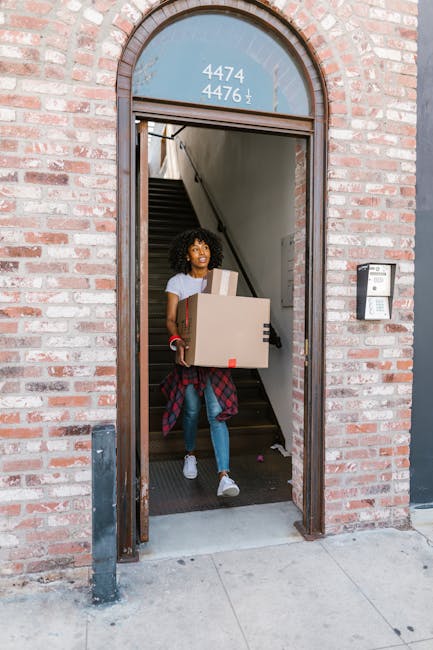
Moving out of a flat in Ruislip HA4 can feel straightforward right up until you meet the staircase. Then the reality hits: a narrow turn, a low ceiling, a bannister that seems to have a personal grudge against wardrobes, and a fridge that suddenly looks twice its size. If you are planning a move in Ruislip HA4 flats, moving tips for tight staircases are not just helpful - they can be the difference between a calm relocation and a very long, very awkward afternoon.
This guide breaks the process down into practical steps you can actually use. You will find advice on measuring, packing, carrying, protecting walls, choosing the right moving method, and deciding when to bring in extra help. It is written for real flats, real staircases, and real people who would rather not scrape a sofa down the hallway at 8am while neighbours listen in. Let's make it easier.
Why Ruislip HA4 flats: moving tips for tight staircases Matters
Flats in and around Ruislip HA4 often come with the same practical challenge: limited access. That usually means stairs that are steeper than they look, landings that do not forgive bulky furniture, and front doors that open just wide enough to make a mistake feel expensive. In a house move, those details matter more than most people expect.
A tight staircase changes almost every part of the job. It affects what can be moved in one piece, how many people are needed, whether the furniture needs dismantling, and even the order in which items should leave the property. A move that would be routine in a ground-floor home can become slow, tiring, and risky in a flat.
There is also the matter of protecting the building. Narrow hallways and shared stairs are easy to mark, especially when a box catches a wall corner or a mattress twists on the turn. In a block with close neighbours, those little incidents can quickly become a bigger headache than the move itself. Truth be told, most people do not think about this until they are already halfway down the stairs, which is not ideal.
That is why proper planning pays off. When you prepare with staircase access in mind, you save time, reduce damage risk, and make the whole move feel much less chaotic. If you are looking for a wider overview of organised relocation planning, it can help to pair this guide with your path to a tranquil and organised move and the more packing-focused advice in expert advice on how to pack smartly for a house move.
How Ruislip HA4 flats: moving tips for tight staircases Works
The basic idea is simple: before anything moves, you make the route as clear and predictable as possible. That means measuring the items, checking the stairwell, removing obstacles, and deciding which pieces will travel assembled and which should be taken apart.
A good flat move through a tight staircase usually works in three stages. First comes the assessment. You measure the widest furniture pieces, the staircase width, the landing space, the ceiling height, and any awkward points like a bend halfway up. Second comes preparation. You pack in manageable sizes, protect surfaces, and dismantle bulky items where possible. Third comes the actual movement, which should be slow, steady, and coordinated.
The thing people underestimate is the turning point on the staircase. A chair may fit comfortably when upright, then suddenly refuse to rotate around the bend. A wardrobe might clear the doorway but catch the rail on the way down. That is why experienced movers treat the stairwell like a working space, not just a corridor. Once you start thinking that way, the route becomes easier to control.
If you want a clearer picture of the lifting side of the process, it helps to understand body mechanics too. The guide on kinetic lifting mechanics explains why balance, posture, and controlled movement matter so much when stairs are involved. And if the move includes items better handled by a specialist, such as a piano, it is worth reading why DIY piano moving is a bad idea before you attempt anything ambitious.
Key Benefits and Practical Advantages
Doing this properly gives you more than peace of mind. It changes the shape of the move.
- Less risk of damage: Furniture, walls, bannisters, and doors are less likely to get scratched or chipped.
- Safer lifting: Smaller, lighter loads are easier to carry and easier to balance on stairs.
- Faster loading and unloading: Clear planning reduces backtracking and hesitation on the staircase.
- Better teamwork: Everyone knows which item is next, where it turns, and who leads.
- Less stress: A move feels calmer when you are not improvising every five minutes.
There is also a subtle benefit people forget: confidence. Once you have checked the route and packed properly, you stop second-guessing every item. You do not stand in the hallway thinking, "Will this fit?" for ten minutes. You already know the answer.
That confidence matters most in flats, where the margin for error is slim. A one-inch difference in box size can be the difference between a smooth carry and a frustrating stop-start shuffle on the landing. Small detail, big consequence.
For bulky household pieces, the right preparation can make or break the move. A sofa, for example, benefits from the sort of advance planning discussed in long-term sofa care and storage tips, while beds and frames are much easier to move if you follow hassle-free bed and mattress moving tips. Those articles are not just for storage or bedroom moves - they help with staircase access too.
Who This Is For and When It Makes Sense
This guide is especially useful if you are moving from a first-floor or upper-floor flat in Ruislip HA4, but honestly, it applies to anyone dealing with narrow internal stairs, communal hallways, or awkward turns. It is also useful if you are moving into a flat and need to work in reverse, which can be even trickier if the building has limited landing space.
You will find it most relevant if you are:
- moving from a one-bedroom or two-bedroom flat with shared access
- transporting furniture with awkward dimensions
- moving without a lift or with a lift that is too small for larger items
- trying to avoid damage in a rented property
- working on a tight schedule and cannot afford repeated trips
- moving as a student, tenant, or first-time renter
It also makes sense if you are trying to keep costs under control. Packing and dismantling things well can reduce the need for extra labour time. If you are comparing support options, the pages on flat removals, man and van help, and removals services in Hillingdon may be useful as part of your planning, especially if you want a service that is used to working in tight spaces.
Step-by-Step Guidance
1) Measure the route before touching the furniture
Start with the staircase itself. Measure the width at the narrowest point, the depth of the landing, and the height of any low ceiling sections. Then measure the largest items you plan to move. Do not rely on memory. People are often surprised by how much wider a sofa feels once it is tilted at stair angle - the geometry gets rude very quickly.
Check for handrails, light fittings, radiators, picture frames, and doors that swing into the route. If you can, take a few photos. That small habit makes it easier to visualise the turn, especially when the day becomes busy and your brain starts dropping detail.
2) Decide what should be dismantled
Anything that comes apart safely should be considered for dismantling: bed frames, table legs, shelving units, and some wardrobe sections. Flat-pack furniture often moves better when broken down properly, even if it takes a bit longer at the start.
Keep fittings in labelled bags and tape those bags to the relevant item or place them in one clearly marked box. It sounds obvious, but it saves time later. Nobody enjoys a 9pm search for the correct bolt when the bed is halfway rebuilt and everyone is tired.
3) Pack for stair control, not just box count
Boxes should be small enough to hold securely on a landing. Heavy books, kitchen items, and tools should be split into smaller loads. A giant box might seem efficient at ground level, but on stairs it becomes awkward, unstable, and a bit of a menace.
Use sturdy tape, strong bottoms, and consistent box sizes where possible. Avoid loose or overfilled boxes that bulge and tip. If you need more packing support, the practical guide at packing and boxes in Hillingdon is a sensible companion read.
4) Create a clear staircase workflow
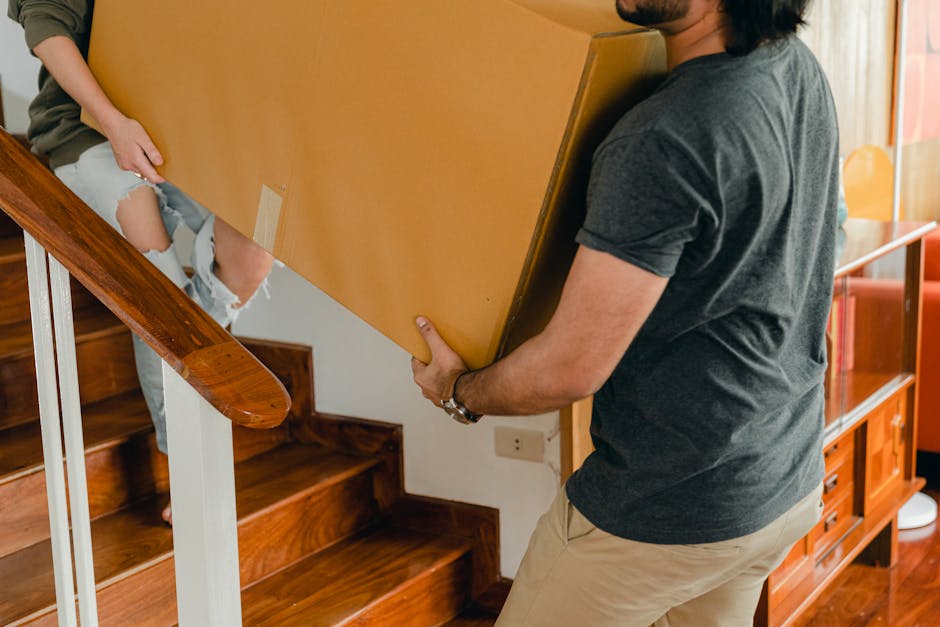
Decide who goes first, who spots, and who clears the landing. On narrow stairs, it helps to have one person lead the item from the lower end while another guides from above or below. That way, the object moves in a controlled line instead of wobbling side to side.
One simple rule: never rush the turns. Pause. Re-grip. Then move again. A small pause is far cheaper than a damaged wall or a strained shoulder.
5) Protect surfaces and make the route safer
Use floor coverings, door protectors, and soft blankets where appropriate. These do not need to be fancy. The aim is to reduce scuffs and give yourself a cleaner surface to work on. You can also move small obstacles first, such as mats, umbrella stands, and hallway shoes. Those little things are easy to miss, then somehow everyone trips over them at the same time. Human nature, I suppose.
6) Move the biggest items last, not first
There is a logic to the order of loading. Clear the smaller items and loose boxes first. Once the route is open and your crew is warmed up, move the large furniture. This reduces pressure and gives you more room to adapt when something needs a second attempt.
For awkward appliances or anything that needs temporary holding space, consider whether storage helps. The advice in strategies for storing your freezer when idle and storage options in Hillingdon can be useful if your move-out and move-in dates do not line up perfectly.
Expert Tips for Better Results
Here is where the job gets noticeably easier.
- Use blankets as friction control: A well-placed blanket under a sofa edge can help during short repositioning moves.
- Remove drawers and loose shelves: This cuts weight and stops internal movement during a carry.
- Wrap edges, not just surfaces: Corners are the first things to hit walls on stair turns.
- Keep grip points visible: Do not bury useful handles under layers of tape and wrap.
- Work with the staircase, not against it: Sometimes tilting an item more steeply is the only way through a landing.
- Keep water and a quick break handy: Even a short move can be tiring in a warm stairwell.
In our experience, the best moves are rarely the ones with the fanciest equipment. They are the ones with the clearest plan. A cheap marker pen, a roll of tape, and a sensible packing order can be more useful than a van full of random spare blankets. Not glamorous, but effective.
It also helps to plan for the end of the move, not just the start. If you will be unpacking late in the day, put bedding, toiletries, phone chargers, and a kettle-box somewhere easy to reach. The article on cleaning before relocation is helpful if you want to leave the flat properly prepared before handover or deep clean day.
Common Mistakes to Avoid
Most staircase problems come from a handful of avoidable mistakes.
- Skipping measurements: Guessing is the fastest route to a stuck sofa.
- Overpacking boxes: Heavy boxes are harder to turn and more likely to drop.
- Forgetting the landing: A staircase may be wide enough, but the landing might not be.
- Trying to carry too much at once: Two light trips are better than one dangerous one.
- Not protecting the walls: A single scrape can cause unnecessary cost and stress.
- Moving without enough help: Solo effort has limits, especially with bulky items.
The solo angle deserves a word of caution. If you are tempted to do everything yourself, read solo heavy lifting techniques first. It is useful guidance, but it also reminds you where the line is. Some jobs are fine alone; others really are not.
Another common issue is timing. People often try to move at the same moment as everyone else on the block, which means shared hallways, impatient neighbours, and nowhere to rest an oversized item. If you can choose your slot carefully, that one decision can make the whole morning far calmer.
Tools, Resources and Recommendations
You do not need a warehouse of moving gear, just a small set of reliable basics.
| Tool or resource | What it helps with | Why it matters in tight staircases |
|---|---|---|
| Furniture blankets | Surface protection and light cushioning | Reduces marks on walls and furniture during turns |
| Strong tape and labels | Box security and identification | Keeps loads manageable and prevents mix-ups |
| Ratchet straps or tie-downs | Securing items in the van | Stops movement after you have already handled the awkward staircase stage |
| Blanket or floor runners | Protecting flooring and reducing scuffing | Useful in shared entrances and hallway corners |
| Professional moving support | Lifting, loading, route planning | Helps when staircases are narrow, steep, or time-sensitive |
For service planning, it is sensible to review the wider options on services overview, man with a van in Hillingdon, and removal van options if you are comparing what level of support suits your move.
Sometimes the right recommendation is not a product, but a decision: declutter first. If you can reduce the volume before moving day, the staircase becomes less of a bottleneck. The piece on strategic decluttering is worth a look if you want to trim the load without overthinking it.
Law, Compliance, Standards, or Best Practice
For a flat move, the main compliance concerns are usually practical rather than legal drama. Still, good practice matters. If you live in a rented flat, check your tenancy obligations around damage, access, cleaning, and notice. If you are part of a leasehold block, be mindful of communal areas and shared access rules. A managing agent may have building-specific requirements about moving times, lift use, or protecting communal surfaces.
From a safety perspective, the sensible standard is straightforward: do not lift beyond your ability, do not block emergency exits, and do not damage shared property. In the UK, moving safely also means using reasonable care for yourself and anyone helping you. That sounds obvious, but in the rush of moving day people sometimes forget how quickly a corner can catch a wall or a wet shoe can slide on a landing.
If you are hiring help, look for clear communication about insurance, safety, and what the crew will or will not move. That is one reason people often review insurance and safety information before booking. It is a sensible habit, not a fuss.
For students and temporary renters, timing and access can matter even more. The page on student removals in Hillingdon may be relevant if you are moving term-time furniture or a compact flat load in and out of a shared block.
Options, Methods, or Comparison Table
There is no single right way to move through a tight staircase, but some methods are clearly better than others depending on the item and the level of difficulty.
| Method | Best for | Pros | Watch out for |
|---|---|---|---|
| DIY with friends | Light to medium loads, short routes | Low cost, flexible timing | Higher risk of poor lifting and damage if coordination is weak |
| Partial dismantling | Beds, tables, modular furniture | Improves stair clearance and reduces strain | Needs careful labelling and reassembly later |
| Professional flat move support | Bulky items, awkward staircases, time pressure | Better handling, route planning, less stress | Costs more than a pure DIY move |
| Staged move with storage | Delayed handover or excess furniture | Less crowding, more room to plan | Requires an extra step and possible storage cost |
For many Ruislip HA4 flat moves, the best answer is a mix: dismantle what you can, move small loads first, and get help for the awkward pieces. That balanced approach tends to work better than stubbornly forcing everything through the stairs because it all "should" fit. Should does a lot of heavy lifting in moving conversations, and not in a good way.
Case Study or Real-World Example
Here is a realistic example. A couple moving out of a second-floor flat in Ruislip HA4 had a double bed frame, a wardrobe, a sofa, a dining table, and about thirty boxes. The staircase was narrow, the landing was tight, and there was a sharp turn near the top.
They did three things right. First, they measured the key furniture against the staircase before the move. Second, they dismantled the bed frame and removed the wardrobe doors. Third, they packed the boxes by weight, not by room, so no one ended up carrying a monstrous box of books. Small win, but it changed the day.
What made the difference was sequence. Boxes left first. The sofa went after the hall was clear. The wardrobe was carried in sections. The table legs were removed. Nothing dramatic, nothing fancy. Just steady decisions made before the pressure was on.
By mid-afternoon, the move was done without wall damage or frantic reattempts on the stairs. There was still the usual moving-day mess - tape everywhere, one missing screwdriver, somebody asking where the kettle went - but the difficult part had been handled properly.
If a move like that sounds familiar, the broader guidance on house removals in Hillingdon and flat removals can help you think through the support level you need. And if you are trying to keep moving costs controlled in a wider local context, the local tips on saving on West Drayton moves with local tips, best times to move near Hayes Town, and airport-access and parking tips for Heathrow-area moves are useful adjacent reads.
Practical Checklist
Use this as your last pre-move sanity check.
- Measure staircase width, landings, and low ceiling points.
- Measure the largest furniture and appliance items.
- Decide what needs dismantling.
- Label screws, fittings, and separate parts clearly.
- Pack heavy items into smaller boxes.
- Protect walls, floors, and door frames.
- Clear hallways, mats, and loose obstacles.
- Plan who leads each item on the stairs.
- Set aside essentials for first-night access.
- Confirm parking or loading space if needed.
- Check whether you need extra help for awkward items.
- Allow more time than you think. Honestly, always.
If you want to reduce waste while you are decluttering, a sensible next step is to look at bulky waste removal in Hillingdon and avoiding extra van fees alongside the sustainability-focused notes on recycling and sustainability. It is a practical way to avoid dragging unwanted items into your new place.
Get a free quote today and see how much you can save.
Conclusion
Moving in Ruislip HA4 flats with tight staircases is never just about carrying boxes. It is about planning the route, shrinking the load, protecting the building, and keeping everyone safe enough to finish the job without drama. When you prepare well, the staircase stops feeling like an obstacle and starts feeling like a route with rules you understand.
The smartest moves are usually the ones built on patience, clear measurements, and a little bit of common sense. Not fancy. Just solid. If you can keep the staircase clear, the furniture light, and the timing realistic, you are already ahead of the game.
And once the last box is through the door, there is a real relief in that quiet moment before the unpacking starts. The hard bit is done. That matters.